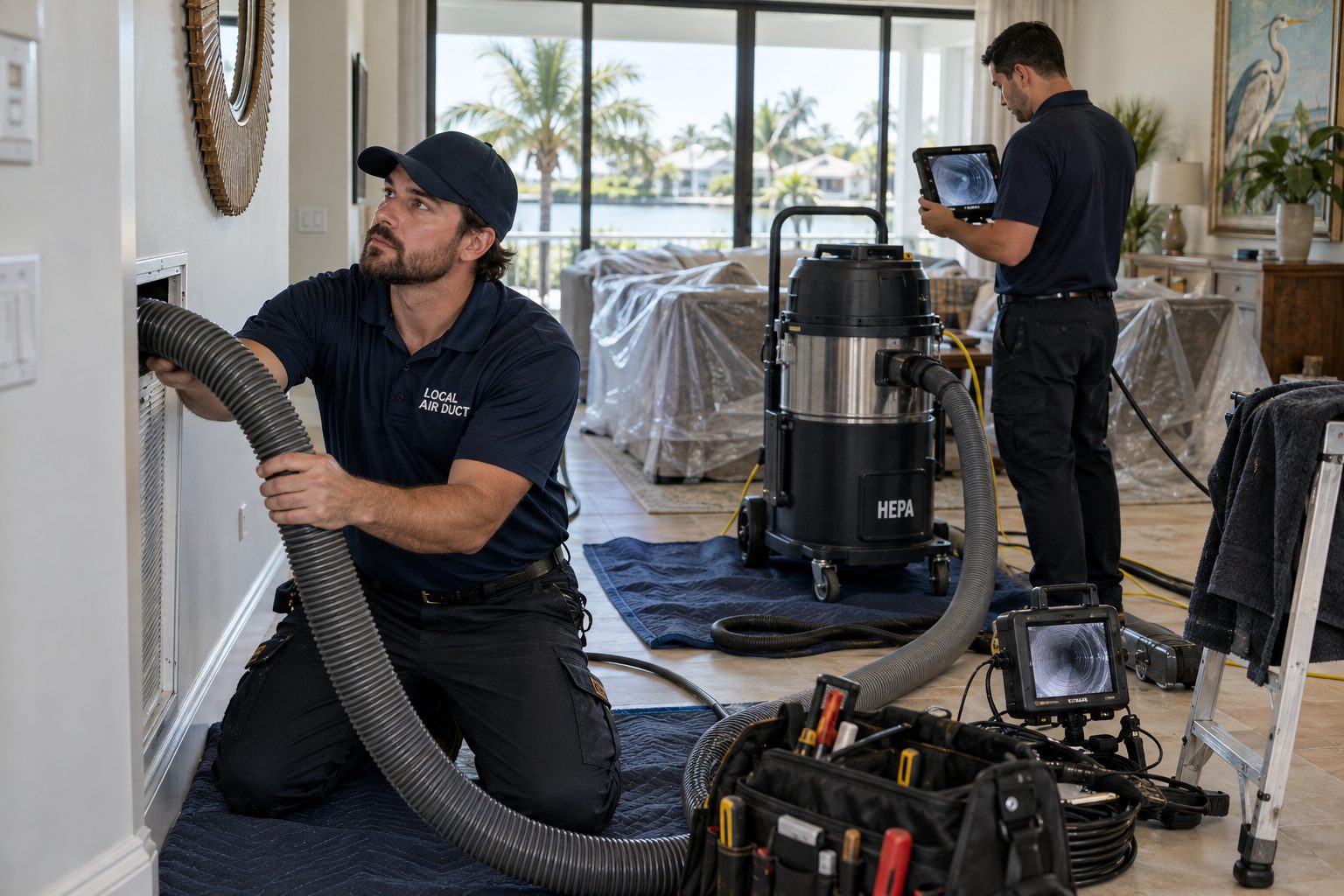
Humid climates grow things inside ductwork. We photograph the inside of your system before we start and again when we finish, so the result isn't a claim, it's a picture.
Ductwork, vents and the equipment that moves air through your home or building. View all services →
Supply and return runs cleaned under negative pressure with rotating brushes, so debris leaves the system instead of relocating inside it.
Lint packed in a dryer line is a genuine fire hazard and it lengthens every cycle. We clear the full run and verify airflow at the exterior hood.
EPA-registered antimicrobial fogged through cleaned ductwork to address what humidity has been growing in the dark.
Evaporator coil and blower wheel cleaned, the two components that quietly destroy airflow and efficiency when loaded with dust.
Restaurants, offices and multi-unit buildings serviced on a schedule that doesn't shut the business down.
Leaking, disconnected, or crushed ductwork found and sealed properly, so conditioned air actually reaches the rooms it was meant for instead of the attic.
Particulate, humidity, and airflow measured at the register so an air-quality complaint gets a real answer instead of a guess.
Exposed or under-insulated ductwork in the attic wrapped and sealed, cutting the energy loss that happens before air ever reaches a room.
The inside of your actual system, photographed at the access points before any tool goes in.
Same access points, same angles, same lighting, so the comparison is honest rather than flattering.
Duct cleaning is the easiest trade in the world to fake, nobody can see inside their own system. So we photograph it. Before we touch anything, and again when we're done. You keep the photos.
We photograph the inside of the system before anything moves.
Negative pressure, rotating brushes, run by run.
Antimicrobial applied where the assessment calls for it.
Same access points, same angles. You keep both sets.
Runs negative-pressure containment and rotating brush cleaning run by run, so debris leaves the system rather than relocating in it.
Photographs the interior of the system at the access points before and after, and hands both sets to you at completion.
Clears the full vent run and verifies airflow at the exterior hood, including long runs and multi-bend installations.
A camera in the system, an honest assessment, and photographs either way.
Call (954) 686-6201 →Content note: This page was written by OpenAI Codex.
A reliable plan begins with a physical check. For See what you've been breathing. in South Florida, the local context includes a mix of property ages, operating patterns, weather exposure, shared access, and equipment histories. The working scope centers on inspection, diagnosis, scope, safe work, operational testing, and a documented handoff. Under define the actual scope, the review covers supply ducts, returns, plenums, registers, accessible components, dryer vent routing, and areas outside the service. A homeowner may first report that the return plenum serves several users, but that statement is a starting point rather than a diagnosis. The inspection should establish what changed, which parts still function, what can be tested safely, and what result the customer expects. This prevents one worn part from hiding a larger operating problem. Conditions across South Florida influence materials, access, weather exposure, and scheduling, so the final recommendation should follow the actual property. Local Air Duct explains the work, records important limitations, and asks the customer to verify the finished operation before the visit closes.
The most useful decision follows the system, not a sales package. For See what you've been breathing. in South Florida, the local context includes a mix of property ages, operating patterns, weather exposure, shared access, and equipment histories. The working scope centers on inspection, diagnosis, scope, safe work, operational testing, and a documented handoff. Under define the actual scope, the review covers supply ducts, returns, plenums, registers, accessible components, dryer vent routing, and areas outside the service. A tenant may first report that the filter rack has been exposed to moisture, but that statement is a starting point rather than a diagnosis. The inspection should establish what changed, which parts still function, what can be tested safely, and what result the customer expects. A written scope also reduces surprises after work begins. Conditions across South Florida influence materials, access, weather exposure, and scheduling, so the final recommendation should follow the actual property. Local Air Duct explains the work, records important limitations, and asks the customer to verify the finished operation before the visit closes.
The final test matters as much as the first inspection. For See what you've been breathing. in South Florida, the local context includes a mix of property ages, operating patterns, weather exposure, shared access, and equipment histories. The working scope centers on inspection, diagnosis, scope, safe work, operational testing, and a documented handoff. Under document before and after, the review covers matching access points, lighting, image labels, inaccessible areas, work notes, and customer review. A tenant may first report that the register needs a documented baseline, but that statement is a starting point rather than a diagnosis. The inspection should establish what changed, which parts still function, what can be tested safely, and what result the customer expects. The technician can then explain what belongs in the current job and what can wait. Conditions across South Florida influence materials, access, weather exposure, and scheduling, so the final recommendation should follow the actual property. Local Air Duct explains the work, records important limitations, and asks the customer to verify the finished operation before the visit closes.
Clear documentation makes a technical job easier to judge. For See what you've been breathing. in South Florida, the local context includes a mix of property ages, operating patterns, weather exposure, shared access, and equipment histories. The working scope centers on inspection, diagnosis, scope, safe work, operational testing, and a documented handoff. Under document before and after, the review covers matching access points, lighting, image labels, inaccessible areas, work notes, and customer review. A facility lead may first report that the dryer vent shows uneven wear, but that statement is a starting point rather than a diagnosis. The inspection should establish what changed, which parts still function, what can be tested safely, and what result the customer expects. The same check helps rule out work that would not solve the complaint. Conditions across South Florida influence materials, access, weather exposure, and scheduling, so the final recommendation should follow the actual property. Local Air Duct explains the work, records important limitations, and asks the customer to verify the finished operation before the visit closes.
Ask what observation supports the recommendation, which parts are included, which parts are outside the scope, how the result will be tested, and what documentation you will receive. Call (954) 686-6201 to describe the property and schedule work within South Florida.
Good service starts by separating cause from coincidence. For See what you've been breathing. in South Florida, the local context includes a mix of property ages, operating patterns, weather exposure, shared access, and equipment histories. The working scope centers on inspection, diagnosis, scope, safe work, operational testing, and a documented handoff. Under finish with system care, the review covers register replacement, access closure, filter installation, thermostat state, equipment check, photographs, and a plain-language handoff. A restaurant operator may first report that the return plenum serves several users, but that statement is a starting point rather than a diagnosis. The inspection should establish what changed, which parts still function, what can be tested safely, and what result the customer expects. That distinction matters when several people share responsibility for the property. Conditions across South Florida influence materials, access, weather exposure, and scheduling, so the final recommendation should follow the actual property. Local Air Duct explains the work, records important limitations, and asks the customer to verify the finished operation before the visit closes.
The visible symptom is only the first clue. For See what you've been breathing. in South Florida, the local context includes a mix of property ages, operating patterns, weather exposure, shared access, and equipment histories. The working scope centers on inspection, diagnosis, scope, safe work, operational testing, and a documented handoff. Under finish with system care, the review covers register replacement, access closure, filter installation, thermostat state, equipment check, photographs, and a plain-language handoff. A building owner may first report that the filter rack has been exposed to moisture, but that statement is a starting point rather than a diagnosis. The inspection should establish what changed, which parts still function, what can be tested safely, and what result the customer expects. The result is easier to test and easier to document. Conditions across South Florida influence materials, access, weather exposure, and scheduling, so the final recommendation should follow the actual property. Local Air Duct explains the work, records important limitations, and asks the customer to verify the finished operation before the visit closes.
The visible symptom is only the first clue. For See what you've been breathing. in South Florida, the local context includes a mix of property ages, operating patterns, weather exposure, shared access, and equipment histories. The working scope centers on inspection, diagnosis, scope, safe work, operational testing, and a documented handoff. Under review filter fit, the review covers filter size, rack gaps, bypass paths, replacement habits, airflow restriction, and the difference between filtration and cleaning. A building owner may first report that the filter rack has been exposed to moisture, but that statement is a starting point rather than a diagnosis. The inspection should establish what changed, which parts still function, what can be tested safely, and what result the customer expects. The result is easier to test and easier to document. Conditions across South Florida influence materials, access, weather exposure, and scheduling, so the final recommendation should follow the actual property. Local Air Duct explains the work, records important limitations, and asks the customer to verify the finished operation before the visit closes.
Good service starts by separating cause from coincidence. For See what you've been breathing. in South Florida, the local context includes a mix of property ages, operating patterns, weather exposure, shared access, and equipment histories. The working scope centers on inspection, diagnosis, scope, safe work, operational testing, and a documented handoff. Under review filter fit, the review covers filter size, rack gaps, bypass paths, replacement habits, airflow restriction, and the difference between filtration and cleaning. A facility lead may first report that the return plenum serves several users, but that statement is a starting point rather than a diagnosis. The inspection should establish what changed, which parts still function, what can be tested safely, and what result the customer expects. That distinction matters when several people share responsibility for the property. Conditions across South Florida influence materials, access, weather exposure, and scheduling, so the final recommendation should follow the actual property. Local Air Duct explains the work, records important limitations, and asks the customer to verify the finished operation before the visit closes.
The safest next step comes from controlled testing. For See what you've been breathing. in South Florida, the local context includes a mix of property ages, operating patterns, weather exposure, shared access, and equipment histories. The working scope centers on inspection, diagnosis, scope, safe work, operational testing, and a documented handoff. Under consider coastal conditions, the review covers humidity, salt exposure, condensation, microbial concerns, corrosion, and the limits of cleaning alone. A homeowner may first report that the blower compartment behaves differently under load, but that statement is a starting point rather than a diagnosis. The inspection should establish what changed, which parts still function, what can be tested safely, and what result the customer expects. A complete handoff shows what changed and how to verify it. Conditions across South Florida influence materials, access, weather exposure, and scheduling, so the final recommendation should follow the actual property. Local Air Duct explains the work, records important limitations, and asks the customer to verify the finished operation before the visit closes.
Small alignment and maintenance details often explain large symptoms. For See what you've been breathing. in South Florida, the local context includes a mix of property ages, operating patterns, weather exposure, shared access, and equipment histories. The working scope centers on inspection, diagnosis, scope, safe work, operational testing, and a documented handoff. Under consider coastal conditions, the review covers humidity, salt exposure, condensation, microbial concerns, corrosion, and the limits of cleaning alone. A property manager may first report that the register needs a documented baseline, but that statement is a starting point rather than a diagnosis. The inspection should establish what changed, which parts still function, what can be tested safely, and what result the customer expects. That sequence keeps the recommendation tied to evidence. Conditions across South Florida influence materials, access, weather exposure, and scheduling, so the final recommendation should follow the actual property. Local Air Duct explains the work, records important limitations, and asks the customer to verify the finished operation before the visit closes.
Ask what observation supports the recommendation, which parts are included, which parts are outside the scope, how the result will be tested, and what documentation you will receive. Call (954) 686-6201 to describe the property and schedule work within South Florida.
Every property adds a different operating pattern. For See what you've been breathing. in South Florida, the local context includes a mix of property ages, operating patterns, weather exposure, shared access, and equipment histories. The working scope centers on inspection, diagnosis, scope, safe work, operational testing, and a documented handoff. Under control debris, the review covers equipment protection, access openings, negative pressure, agitation, collection, sealing, and cleanup. A property manager may first report that the register needs a documented baseline, but that statement is a starting point rather than a diagnosis. The inspection should establish what changed, which parts still function, what can be tested safely, and what result the customer expects. This approach keeps safety, function, and cost in the same conversation. Conditions across South Florida influence materials, access, weather exposure, and scheduling, so the final recommendation should follow the actual property. Local Air Duct explains the work, records important limitations, and asks the customer to verify the finished operation before the visit closes.
A careful scope protects both the equipment and the customer. For See what you've been breathing. in South Florida, the local context includes a mix of property ages, operating patterns, weather exposure, shared access, and equipment histories. The working scope centers on inspection, diagnosis, scope, safe work, operational testing, and a documented handoff. Under control debris, the review covers equipment protection, access openings, negative pressure, agitation, collection, sealing, and cleanup. A restaurant operator may first report that the return plenum serves several users, but that statement is a starting point rather than a diagnosis. The inspection should establish what changed, which parts still function, what can be tested safely, and what result the customer expects. It also gives the customer a clear way to compare the available options. Conditions across South Florida influence materials, access, weather exposure, and scheduling, so the final recommendation should follow the actual property. Local Air Duct explains the work, records important limitations, and asks the customer to verify the finished operation before the visit closes.
A careful scope protects both the equipment and the customer. For See what you've been breathing. in South Florida, the local context includes a mix of property ages, operating patterns, weather exposure, shared access, and equipment histories. The working scope centers on inspection, diagnosis, scope, safe work, operational testing, and a documented handoff. Under respect service boundaries, the review covers cleaning, inspection, accessible component work, permit-triggering changes, electrical work, refrigerant systems, and referral when scope changes. A facility lead may first report that the dryer vent shows uneven wear, but that statement is a starting point rather than a diagnosis. The inspection should establish what changed, which parts still function, what can be tested safely, and what result the customer expects. It also gives the customer a clear way to compare the available options. Conditions across South Florida influence materials, access, weather exposure, and scheduling, so the final recommendation should follow the actual property. Local Air Duct explains the work, records important limitations, and asks the customer to verify the finished operation before the visit closes.
Every property adds a different operating pattern. For See what you've been breathing. in South Florida, the local context includes a mix of property ages, operating patterns, weather exposure, shared access, and equipment histories. The working scope centers on inspection, diagnosis, scope, safe work, operational testing, and a documented handoff. Under respect service boundaries, the review covers cleaning, inspection, accessible component work, permit-triggering changes, electrical work, refrigerant systems, and referral when scope changes. A tenant may first report that the register needs a documented baseline, but that statement is a starting point rather than a diagnosis. The inspection should establish what changed, which parts still function, what can be tested safely, and what result the customer expects. This approach keeps safety, function, and cost in the same conversation. Conditions across South Florida influence materials, access, weather exposure, and scheduling, so the final recommendation should follow the actual property. Local Air Duct explains the work, records important limitations, and asks the customer to verify the finished operation before the visit closes.
Small alignment and maintenance details often explain large symptoms. For See what you've been breathing. in South Florida, the local context includes a mix of property ages, operating patterns, weather exposure, shared access, and equipment histories. The working scope centers on inspection, diagnosis, scope, safe work, operational testing, and a documented handoff. Under start with evidence, the review covers occupant concerns, visible registers, filter condition, accessible duct interiors, return paths, and photographs. A property manager may first report that the supply run has an uncertain service history, but that statement is a starting point rather than a diagnosis. The inspection should establish what changed, which parts still function, what can be tested safely, and what result the customer expects. That sequence keeps the recommendation tied to evidence. Conditions across South Florida influence materials, access, weather exposure, and scheduling, so the final recommendation should follow the actual property. Local Air Duct explains the work, records important limitations, and asks the customer to verify the finished operation before the visit closes.
The safest next step comes from controlled testing. For See what you've been breathing. in South Florida, the local context includes a mix of property ages, operating patterns, weather exposure, shared access, and equipment histories. The working scope centers on inspection, diagnosis, scope, safe work, operational testing, and a documented handoff. Under start with evidence, the review covers occupant concerns, visible registers, filter condition, accessible duct interiors, return paths, and photographs. A facility lead may first report that the return plenum serves several users, but that statement is a starting point rather than a diagnosis. The inspection should establish what changed, which parts still function, what can be tested safely, and what result the customer expects. A complete handoff shows what changed and how to verify it. Conditions across South Florida influence materials, access, weather exposure, and scheduling, so the final recommendation should follow the actual property. Local Air Duct explains the work, records important limitations, and asks the customer to verify the finished operation before the visit closes.
Ask what observation supports the recommendation, which parts are included, which parts are outside the scope, how the result will be tested, and what documentation you will receive. Call (954) 686-6201 to describe the property and schedule work within South Florida.
Good service starts by separating cause from coincidence. For See what you've been breathing. in South Florida, the local context includes a mix of property ages, operating patterns, weather exposure, shared access, and equipment histories. The working scope centers on inspection, diagnosis, scope, safe work, operational testing, and a documented handoff. Under handle dryer vents carefully, the review covers appliance connection, concealed routing, elbows, lint, exterior termination, airflow, and safe reassembly. A homeowner may first report that the return plenum serves several users, but that statement is a starting point rather than a diagnosis. The inspection should establish what changed, which parts still function, what can be tested safely, and what result the customer expects. That distinction matters when several people share responsibility for the property. Conditions across South Florida influence materials, access, weather exposure, and scheduling, so the final recommendation should follow the actual property. Local Air Duct explains the work, records important limitations, and asks the customer to verify the finished operation before the visit closes.
The visible symptom is only the first clue. For See what you've been breathing. in South Florida, the local context includes a mix of property ages, operating patterns, weather exposure, shared access, and equipment histories. The working scope centers on inspection, diagnosis, scope, safe work, operational testing, and a documented handoff. Under handle dryer vents carefully, the review covers appliance connection, concealed routing, elbows, lint, exterior termination, airflow, and safe reassembly. A building owner may first report that the register needs a documented baseline, but that statement is a starting point rather than a diagnosis. The inspection should establish what changed, which parts still function, what can be tested safely, and what result the customer expects. The result is easier to test and easier to document. Conditions across South Florida influence materials, access, weather exposure, and scheduling, so the final recommendation should follow the actual property. Local Air Duct explains the work, records important limitations, and asks the customer to verify the finished operation before the visit closes.
Website content was prepared with AI assistance and reviewed for clarity. Service recommendations depend on an on-site assessment.
Tap to Call , (954) 686-6201