// THE SERVICE
Attic Duct Insulation Across Broward, Palm Beach & Miami-Dade
A South Florida attic on a sunny afternoon routinely climbs well past 130 degrees, and every foot of ductwork running through that space sits directly in it. Air leaving the air handler at around 55 degrees has to travel across the attic before it ever reaches a vent, and along the way that hot attic air is constantly trying to warm the cooler air moving inside the duct. Where duct wrap is thin, compressed, torn, or missing altogether, that heat transfer happens fast, and the air coming out of the vent is noticeably warmer than the air that left the unit.
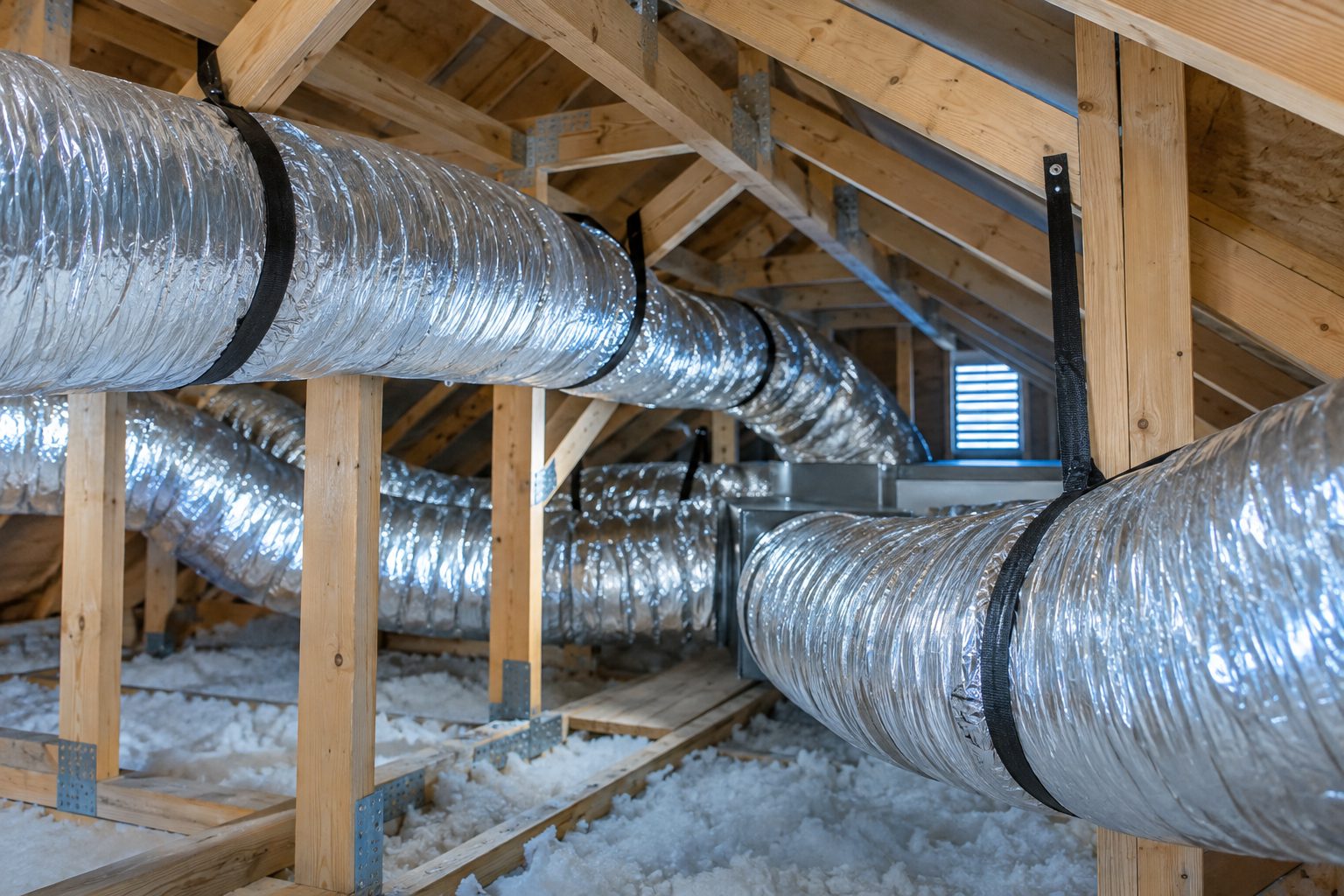
Duct wrap insulation is the flexible, foil-faced fiberglass blanket wrapped around the outside of round and rectangular metal or flex duct to slow that heat gain. It is rated by R-value, a general measure of how well a material resists heat flow, with higher R-values providing more resistance. On accessible duct runs in a hot attic, adding or upgrading this wrap reduces how much of the attic's heat reaches the air moving through the duct before it gets to the room.
Our work on this service is limited to duct-wrap insulation on the sections of attic ductwork we can reach and work on safely, using standard attic access. We do not perform whole-attic blown-in insulation, ceiling or floor insulation, air sealing, or any other work that requires a building permit. If we get into an attic and find that what's needed is permit-required work, we say so directly and do not attempt it. Call (954) 686-6201 to have your accessible duct runs evaluated in Broward, Palm Beach, or Miami-Dade County.
// WHAT IT INCLUDES
What Accessible Attic Duct-Wrap Insulation Includes
Why Attic Heat Matters to Your Ducts
A vented attic in South Florida can run 40 to 60 degrees hotter than the living space below it during peak sun hours. Supply ducts carrying cooled air through that heat are under constant thermal pressure; the bigger the temperature gap and the longer the run, the more cooling is lost before the air ever reaches a room vent.
Inspecting Existing Duct Wrap
Before anything is added, the accessible duct runs are inspected for wrap that has thinned, compressed, torn, or slid loose from age, foot traffic near the duct, or prior attic work. Bare metal sections and areas where the foil facing has separated from the fiberglass are noted, since both reduce how well the existing wrap performs.
Sealing Before Wrapping
Visible gaps or loose connections at accessible duct joints, boots, and seams are addressed before new wrap goes on, since insulation over an air leak does not stop conditioned air from escaping into the attic. Wrapping first without addressing an obvious leak underneath it would trap the problem rather than fix it.
Installing or Upgrading Duct Wrap
New foil-faced duct wrap is fitted snugly around the accessible duct sections, with seams overlapped and taped so the insulating layer stays continuous rather than gapping at the joints. Coverage is matched to the shape and size of each run, since round supply lines and rectangular trunk lines are wrapped differently to keep a consistent layer of coverage.
Comfort and AC Load Impact
Ducts that hold their temperature better mean less of the air handler's cooling output is lost in transit through the attic, which supports more even temperatures room to room and less strain on the system during long summer cooling cycles. It does not replace a properly sized or maintained AC system, but it reduces one specific source of loss along the way.
Scope Limit: Accessible Runs and Duct Wrap Only
This service covers duct wrap on attic duct runs reachable through standard attic access. It does not include whole-attic blown-in insulation, ceiling or wall insulation, structural attic work, or any job requiring a building permit. Runs buried under existing insulation, inside finished ceilings, or otherwise not safely reachable are outside this scope and are noted rather than opened up.
// QUESTIONS
Attic Duct Insulation Questions from Florida Homeowners
How do I know my attic ducts need better wrap insulation?
Common signs include rooms far from the air handler feeling warmer than rooms close to it, vents blowing air that feels less cold than expected even when the system is running properly, higher-than-usual cooling bills during peak summer, and visible duct wrap in the attic that looks thin, torn, or compressed if you've looked up there yourself. An inspection of the accessible runs confirms whether wrap condition is a factor.
What R-value duct wrap do you use?
R-value measures a material's resistance to heat flow in general terms, with higher numbers meaning more resistance to heat moving through it. We select duct wrap suited to attic duct applications and the specific run being covered; the right product depends on the duct's existing insulation, its size and shape, and its accessibility, which is why we look at the ducts directly before recommending a specific wrap.
Will you insulate my whole attic floor or add blown-in insulation?
No. This service is limited to duct wrap on accessible attic duct runs. Whole-attic blown-in insulation, ceiling insulation, and similar attic weatherization work are outside what we do here, and much of that work also requires a building permit in Broward, Palm Beach, and Miami-Dade counties. If that's what your attic needs, we'll tell you plainly rather than attempt it.
What happens if a duct run isn't accessible or needs permit-required work?
We only wrap duct sections we can safely reach through standard attic access. If a run is buried under existing insulation, built into a finished ceiling, or otherwise not reasonably accessible, we note it rather than disturb surrounding materials. If the actual fix requires structural changes or any permit-required work, we say so directly and decline that portion of the job rather than proceed without a permit.
Does wrapping the ducts replace the need for AC maintenance?
No. Duct wrap addresses heat gain through the duct walls in the attic, which is a real but separate issue from the air conditioning system's own performance. A unit that's low on refrigerant, has a dirty coil, or is undersized for the home will still underperform regardless of duct insulation, so wrap works alongside regular AC service rather than in place of it.