// THE SERVICE
Indoor Air Quality Testing for Broward, Palm Beach & Miami-Dade Homes
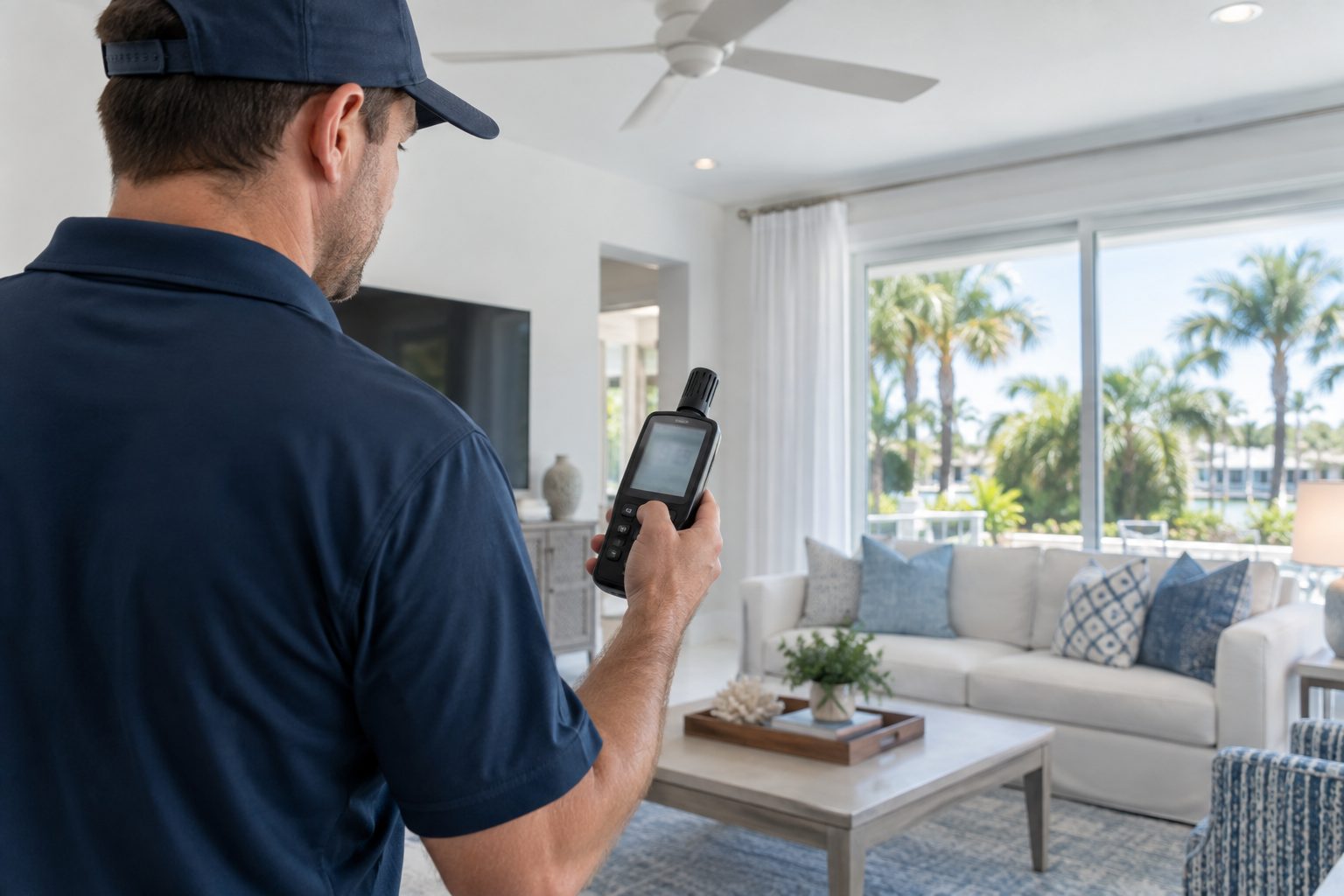
Indoor air quality testing is a screening step, not a lab investigation. Our technicians use handheld and portable instruments to record particulate levels and moisture-related indicators inside your home or business, giving you factual numbers instead of guesswork before you decide whether duct cleaning or other duct service is worth pursuing. Readings are taken at return and supply vents and in main living areas so you have a real snapshot of what your air handling system is circulating right now.
South Florida's climate makes this kind of screening especially relevant. Year-round humidity, heavy pollen seasons, and salt-laden coastal air all interact with a home's ductwork and air handler differently than they would in a drier climate. Air conditioning systems here run nearly constantly, pulling large volumes of air through the same duct pathways day after day, which means whatever is sitting in that ductwork gets recirculated repeatedly through the rooms you spend the most time in.
The real value of testing is comparison. A single reading tells you where things stand today; a before-and-after pair tells you whether a duct cleaning actually changed anything measurable. We record particulate and moisture-indicator readings prior to service, perform the agreed duct work, then take the same measurements again afterward at the same points, so you receive an honest, side-by-side comparison you can review yourself rather than a sales claim with nothing behind it.
// WHAT IT INCLUDES
What Our Indoor Air Quality Testing Covers
Particulate Level Readings
We measure airborne particulate concentrations, including fine dust, pet dander, and general debris circulating through your supply vents, using a portable particle counter. These readings establish a numeric baseline at specific points in the home so any change after duct service can be documented rather than assumed.
Humidity & Moisture Indicators
Relative humidity and surface moisture readings are taken near vents, the air handler, and duct access points. Elevated moisture indicators don't diagnose a specific problem on their own, but they flag conditions worth watching, especially in a climate where humidity swings can affect duct interiors between seasons.
Before/After Comparison Report
Every duct service we perform can be paired with a pre-service and post-service reading set. You get the actual numbers from both visits side by side, so you can judge for yourself whether the service measurably changed particulate or moisture conditions rather than taking our word for it.
Common South Florida Contaminants
Local air commonly carries pollen from year-round blooming vegetation, fine dust pulled in through building envelopes, and particulates tied to constant AC cycling in humid conditions. Testing captures how much of this is currently present in your circulated air at the time of the visit.
Who Testing Benefits Most
Households managing allergies or asthma, buyers of new-construction homes wanting a baseline before move-in, and homeowners testing conditions after a renovation or construction dust event all get practical value from a documented reading, since each situation benefits from knowing what's actually in the air rather than assuming.
What This Testing Is Not
This is a screening and measurement service to inform duct service decisions, not a certified mold inspection, laboratory spore-count analysis, or medical diagnosis. If readings or visible conditions suggest a deeper moisture or mold concern, we'll recommend you contact a licensed indoor-environmental professional for a formal assessment.
// QUESTIONS
Indoor Air Quality Testing Questions
What exactly does your indoor air quality testing measure?
We take particulate level readings using a portable particle counter and record moisture-related indicators such as relative humidity and surface moisture near vents, the air handler, and duct access points. These are factual, instrument-based readings taken at the time of your visit, giving you a documented snapshot of current conditions rather than an interpretation or diagnosis.
Can this testing tell me whether I have mold?
No. Our technicians can note visible conditions and record moisture indicators, but this is not a certified mold inspection or laboratory spore-count assessment, and we do not perform mold remediation or removal of any kind. If moisture readings or visible signs raise a concern, we'll recommend you contact a licensed indoor-environmental professional for a formal evaluation.
How does the before-and-after baseline work with duct cleaning?
We record particulate and moisture-indicator readings before your duct service begins, complete the agreed cleaning work, then take the same readings again afterward at comparable points. You receive both sets of numbers so you can compare them directly and judge whether the service produced a measurable change, instead of relying on a general claim of improvement.
Why does South Florida's climate make this testing more relevant?
Broward, Palm Beach, and Miami-Dade homes deal with near-constant humidity, long pollen seasons, and coastal air, and air conditioning systems here run almost year-round. That means ductwork is continuously recirculating whatever particulates and moisture are present, so a periodic reading gives homeowners a clearer, current picture than assuming conditions are the same as they were last year.
Who should consider getting indoor air quality testing done?
It's most useful for households managing allergies or asthma who want documented data on air conditions, buyers of new-construction homes who want a baseline reading before move-in, and homeowners testing conditions after a renovation or construction project that may have introduced dust into the system. Call (954) 686-6201 to schedule with our technicians.