// THE SERVICE
Duct Repair & Sealing Services in South Florida
Even a handful of small gaps and loose joints in a duct system can waste a significant share of the conditioned air your air handler produces. Air that escapes into an attic or crawlspace before reaching a room never cools or heats living space, so the equipment runs longer to hit the thermostat setting. Leaks on the return side create negative pressure that pulls hot, humid attic air into the system instead, adding moisture and dust to the airstream that then gets distributed through the home's supply registers, straining the equipment and raising indoor humidity levels.
Many homes across Broward, Palm Beach, and Miami-Dade County have flexible ductwork routed through attics that regularly exceed 120 degrees in summer. Repeated heat cycling dries out the mastic and tape used at factory joints, causing seams to crack and separate over time. Flex duct inner cores can sag, kink, or get crushed where they rest on trusses or get pushed aside during other attic work. Metal boots at registers loosen from age and vibration, and older duct systems sealed only with cloth-backed tape often show that tape peeling away completely after years of attic heat.
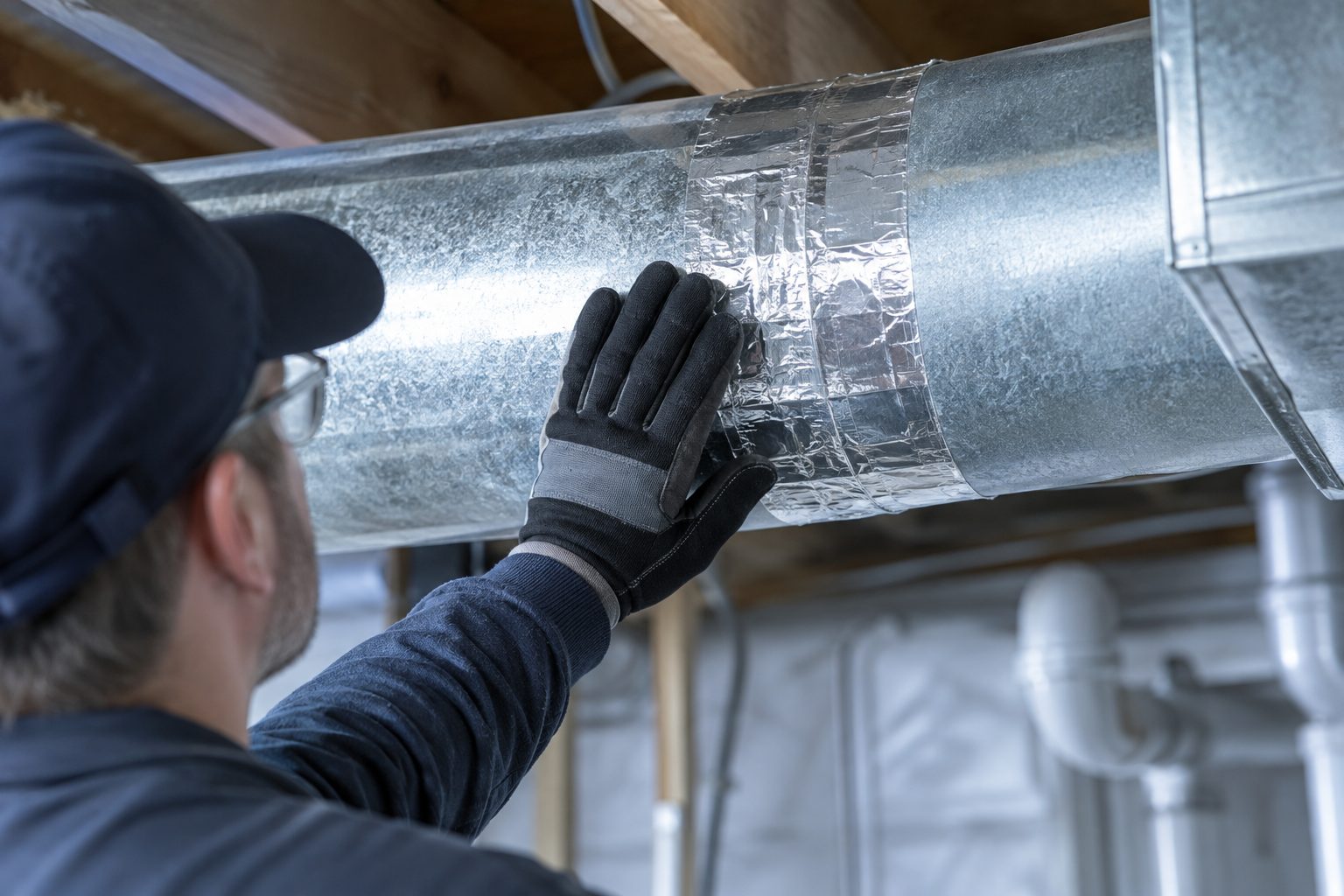
Our technicians inspect accessible duct runs in the attic, closet chases, and mechanical areas to locate gaps, disconnected joints, crushed sections, and leaky seams. Repairs are made using mastic sealant or foil-backed metal tape rated for HVAC duct connections, matched to the type of failure found. Sealing accessible leaks and reconnecting separated joints helps the system deliver more of its conditioned air to the rooms it was designed to serve, which can reduce runtime and ease the load on the air handler and compressor.
// WHAT IT INCLUDES
What Our Duct Repair & Sealing Service Includes
Duct Leak Inspection
Technicians visually inspect accessible duct sections in the attic, closets, and mechanical rooms, checking joints, seams, boots, and flex runs for separation, gaps, crushing, and worn-out tape or mastic. Where possible, airflow at registers is checked to help confirm which sections are contributing to loss before any repair work begins.
Sealing Joints and Seams with Mastic
Gaps and small seam separations at duct joints, plenum connections, and takeoffs are sealed with mastic, a brush- or glove-applied compound that bonds to metal and duct board and stays flexible as materials expand and contract with attic heat, closing off leak points that dried-out factory tape has stopped sealing.
Reconnecting Separated Duct Runs
Where a flex or metal run has come loose from a plenum, trunk line, or branch takeoff, technicians reattach the section, secure it with an appropriate clamp or strap, and seal the connection with mastic or metal tape so conditioned air travels through the duct instead of dumping into the attic.
Crushed or Damaged Flex Duct Section Repair
Flex duct that has been kinked, crushed under attic storage, or pinched against framing restricts airflow and can eventually tear at the crease. Accessible damaged sections are straightened, re-supported, or cut out and replaced with a matching section, then sealed and strapped so the run holds its shape going forward.
Boot and Register Connection Sealing
The metal boot where a duct meets a supply or return register is a common leak point, especially where it passes through drywall or a floor. Technicians reseal the boot-to-duct connection and the surrounding gap with mastic or tape to stop conditioned air from escaping into the attic or wall cavity.
Post-Repair Airflow Verification
After sealing and reconnecting accessible sections, technicians check that airflow reaches supply registers as expected and that repaired joints hold under system operation. This confirms the repair addressed the leak points found during inspection and that air is once again being delivered to the rooms it serves.
// QUESTIONS
Duct Repair & Sealing FAQs
What are the signs my ducts need repair or sealing?
Common signs include rooms that feel warmer or cooler than others, unusually high humidity indoors, a musty smell near vents, visibly disconnected or hanging duct sections in the attic, and higher-than-expected cooling costs. Dust buildup around registers can also point to attic air being pulled into the system through leaky return connections. If you notice any of these, an inspection of accessible duct sections can identify specific gaps, disconnections, or damaged areas that are contributing to the problem.
Do you use mastic or tape to seal ducts, and what's the difference?
We use both, depending on the type of failure. Mastic is a brush- or glove-applied sealant that bonds well to seams and small gaps and stays flexible as ducts expand and contract with heat, making it well suited to joint and seam repairs. Foil-backed metal tape is used for certain connections and patch repairs where a taped bond is the appropriate fix. Ordinary cloth duct tape is not used, since it dries out and fails quickly in hot attic conditions.
Can you repair any duct problem, or does some damage require full replacement?
Our service covers accessible duct sections: gaps, disconnected joints, crushed flex, and leaky seams that can be reached and repaired in the attic, closet chases, or mechanical areas. Sections with extensive damage, deteriorated flex duct beyond repair, or ductwork routed through walls or slab that would require permit-required construction fall outside accessible repair. In those cases, we'll let you know what was found so you can weigh your options for that portion of the system.
Will sealing my ducts actually lower my energy bills?
Sealing gaps, seams, and disconnected joints reduces the amount of conditioned air lost before it reaches your rooms, which means the system doesn't have to run as long to satisfy the thermostat. The impact varies by home, based on how much leakage exists, duct location, and attic conditions, so we won't quote a specific savings figure before inspecting your system. What we can do is identify and seal the accessible leak points we find and verify airflow afterward.
What areas do you serve, and how do I schedule a duct repair inspection?
We serve homeowners throughout Broward, Palm Beach, and Miami-Dade County. technicians inspect accessible duct sections in the attic and mechanical areas, identify gaps, disconnections, crushed flex, and leaky seams, and seal or repair what's found using mastic and metal tape. To schedule an inspection or ask about a specific issue you've noticed with airflow, humidity, or comfort in certain rooms, call (954) 686-6201.