// THE SERVICE
Coil & Blower Cleaning for South Florida Homes and Businesses
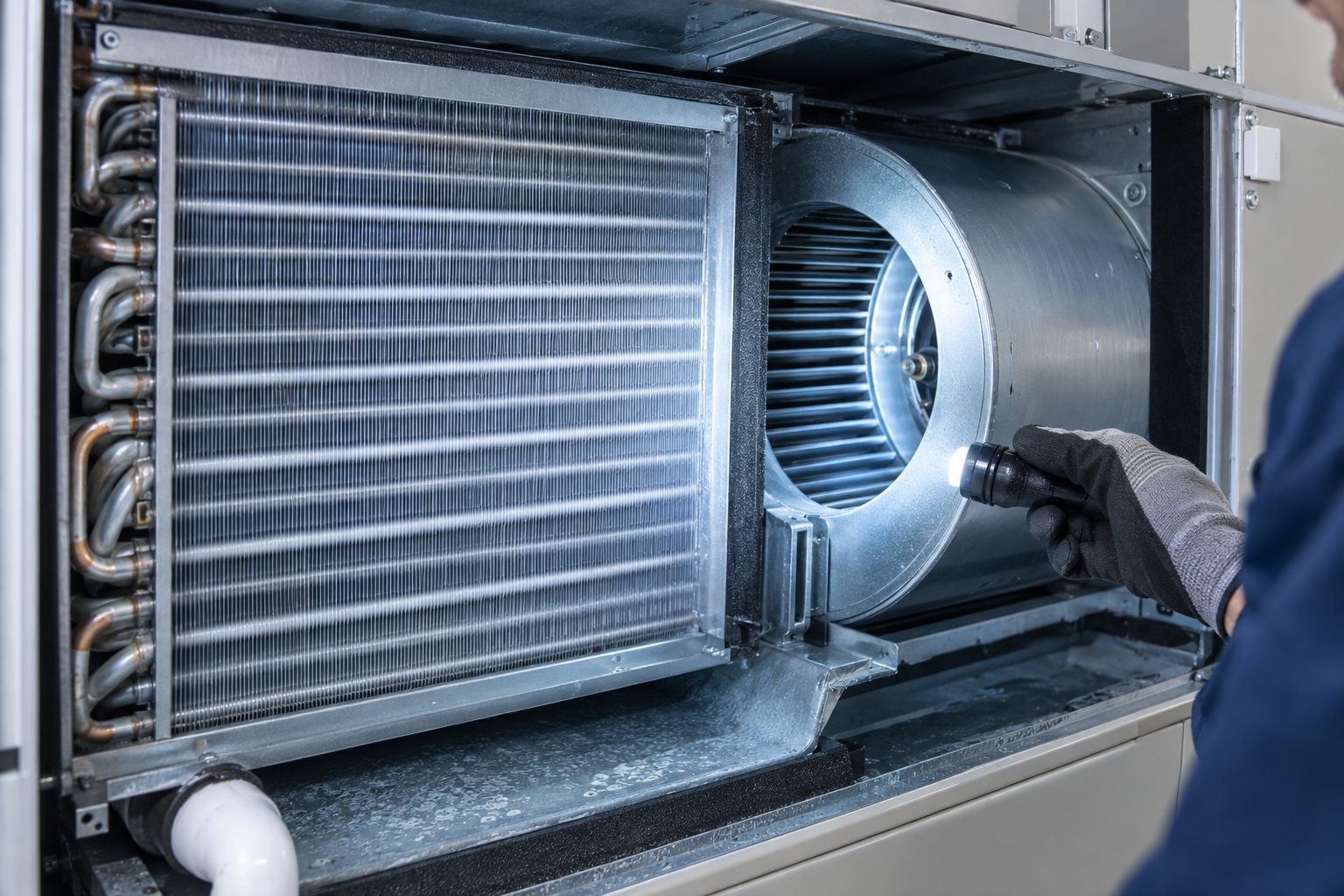
An evaporator coil is where your air conditioner actually removes heat and humidity from indoor air, and a blower wheel is what pushes that conditioned air through your ducts and into every room. When either component is coated in dust, grease film, or matted debris, the system has to work harder to move the same amount of air. Airflow drops, humidity control weakens, and the compressor runs longer to hit the thermostat setting, which shows up directly on monthly electric bills across Broward, Palm Beach, and Miami-Dade County.
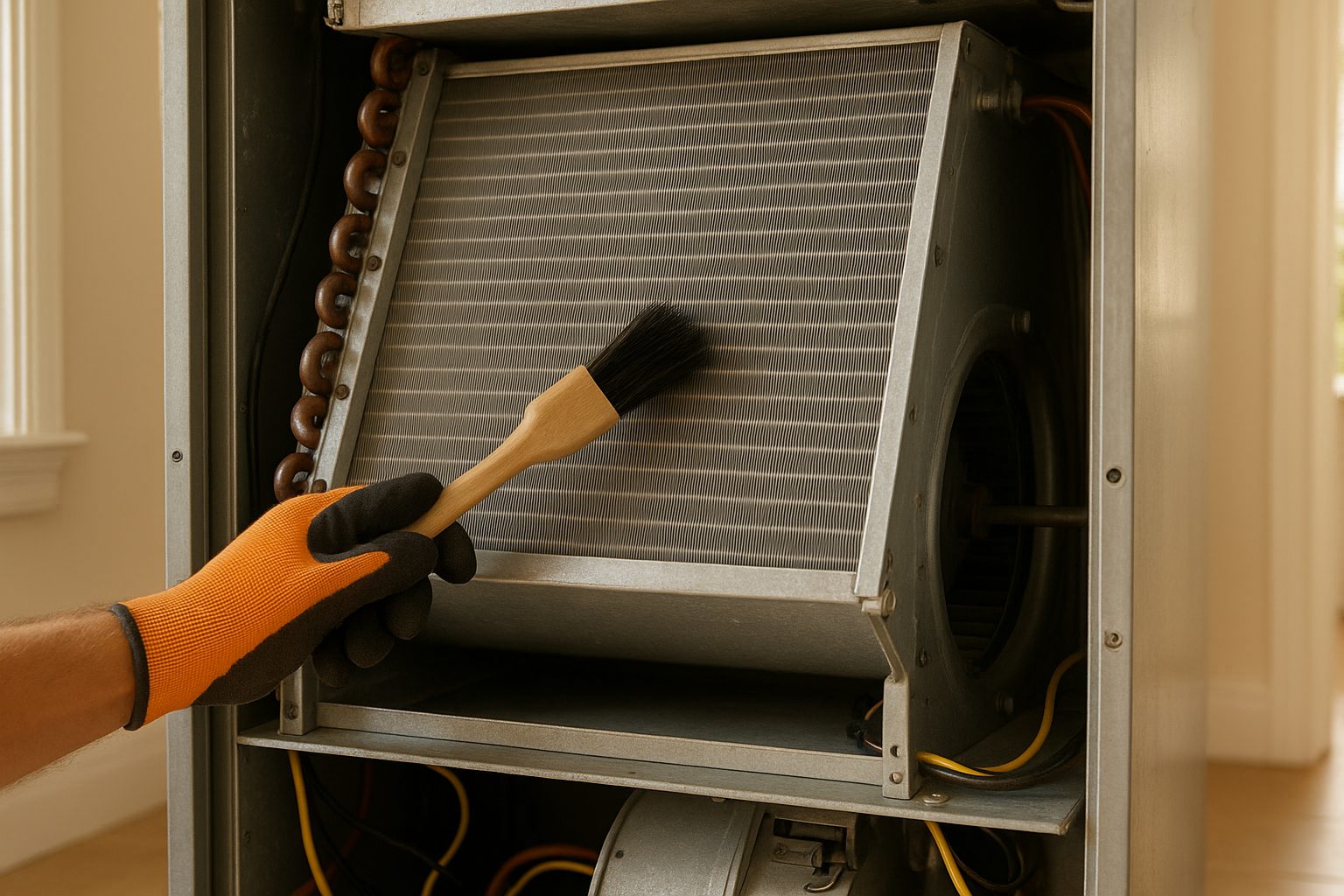
Coil fins are spaced tightly to maximize surface area for heat transfer, so even a thin layer of buildup acts like an insulating blanket that blocks that transfer. Blower wheels have curved blades that trap dust and grime in the pockets between them, and once caked material builds up, it throws the wheel out of balance and restricts the volume of air it can push. Both problems compound each other: a dirty coil forces the blower to work harder, and a fouled blower can't deliver enough air across whatever cooling capacity the coil still has.
Our technicians clean accessible evaporator coils and blower wheels or assemblies to restore airflow and help the system run closer to its rated efficiency. This is component cleaning, not refrigerant work or mechanical repair, and it does not include mold remediation or restoration services. technicians handle every job, working around South Florida's coastal air and near-constant cooling demand to help your system move air the way it was designed to.
// WHAT IT INCLUDES
What Coil & Blower Cleaning Includes
Evaporator Coil Cleaning
We clean accessible evaporator coil fins and surfaces to remove dust, grease film, and debris that block heat transfer. Buildup between fins acts as insulation, forcing the compressor to run longer to reach the same indoor temperature. Restoring clean fin surfaces helps the coil absorb heat efficiently again and supports better humidity removal throughout the home.
Blower Wheel & Assembly Cleaning
The blower wheel's curved blades trap dust and grime in the pockets between them, and caked buildup reduces the volume of air the wheel can move while also throwing it out of balance. We clean accessible blower wheels and housing components to restore airflow and reduce the strain a dirty, unbalanced wheel places on the blower motor.
Drain Pan & Line Inspection
We check the accessible condensate drain pan and line near the coil for standing water, debris, or slow drainage while cleaning, since a coil running inefficiently can contribute to condensation issues nearby. This is a visual check as part of coil service, not plumbing repair or drain line replacement, and any moisture-related concerns are noted for you.
Airflow Restoration
Once coil fins and blower blades are clean, air moves through the system with less resistance, which is the core goal of this service. Better airflow means more consistent temperatures room to room, faster cooling recovery after the thermostat cycles, and less strain on the blower motor working to push air through a partially blocked path.
Coastal Salt Film Buildup
Homes near the Atlantic coast and Intracoastal Waterway across Broward, Palm Beach, and Miami-Dade County draw salt-laden air through outdoor units and into the system, where fine salt particles combine with dust to form a sticky film on coil surfaces. This coastal residue builds up faster than inland dust alone and benefits from more frequent coil attention.
Energy Efficiency Impact
A fouled coil and caked blower wheel both reduce how effectively the system moves and cools air, which means longer run times to reach the same thermostat setting. With cooling systems operating nearly year-round across South Florida, that inefficiency accumulates steadily on monthly electric bills. Cleaning accessible components addresses one of the more common, correctable causes.
// QUESTIONS
Frequently Asked Questions
What are the signs of a dirty coil or blower wheel?
Common signs include weaker airflow from vents, longer run times to reach the set temperature, higher humidity indoors despite the AC running, rising electric bills without a clear cause, and reduced cooling in rooms farther from the air handler. Some systems also develop a musty smell tied to moisture sitting on a dirty coil. If you notice several of these together, coil and blower buildup is a common cause worth checking.
Why does South Florida's climate cause faster coil buildup?
Cooling systems across Broward, Palm Beach, and Miami-Dade County run close to year-round given the region's heat and humidity, so coils and blowers are constantly cycling and pulling in airborne dust, pollen, and moisture. Homes near the coast add salt-laden air into the mix, which combines with dust to form film on coil surfaces faster than dry inland dust alone. That near-constant use is the main reason buildup accumulates faster here than in cooler, drier climates.
Is coil and blower cleaning part of duct cleaning or a separate service?
It can be either. Some customers add coil and blower cleaning onto a full duct cleaning visit since a technician is already on-site and airflow issues often involve both the ducts and the equipment moving air through them. Other customers request coil and blower cleaning as a standalone service when their ducts are in reasonable shape but the system itself shows signs of reduced airflow or efficiency.
Does this service include repairing the AC unit or handling refrigerant?
No. Our technicians clean accessible evaporator coil and blower components to restore airflow and efficiency; we do not perform refrigerant handling, compressor work, or full HVAC mechanical repair. If cleaning reveals a mechanical issue beyond buildup, such as a failing motor or a refrigerant problem, we'll let you know so you can have it addressed by the appropriate service.
How often should coils and blowers be cleaned in this area?
There's no single fixed interval, since buildup speed depends on system age, filter habits, proximity to the coast, and how many hours a day the system runs. Homes running AC nearly year-round, or located near saltwater, tend to need attention sooner than average. If you're seeing weaker airflow, climbing bills, or it's simply been a while since the coil and blower were last serviced, call (954) 686-6201 and we can help you decide what makes sense.